
Dan McClure's Blog
The Ecosystem Innovation Adventure
Tags
- Agile enterprise
- Books and reading
- Choreographers
- Core concepts
- Do bigger things
- Innovation business models
- Innovation ethics
- Innovation management
- Innovation practice
- Innovation programs
- Innovation scaling
- Sector - Aid and development
- Sector - Communications
- Sector - Technology
- Strategy and design
- Trends and drivers
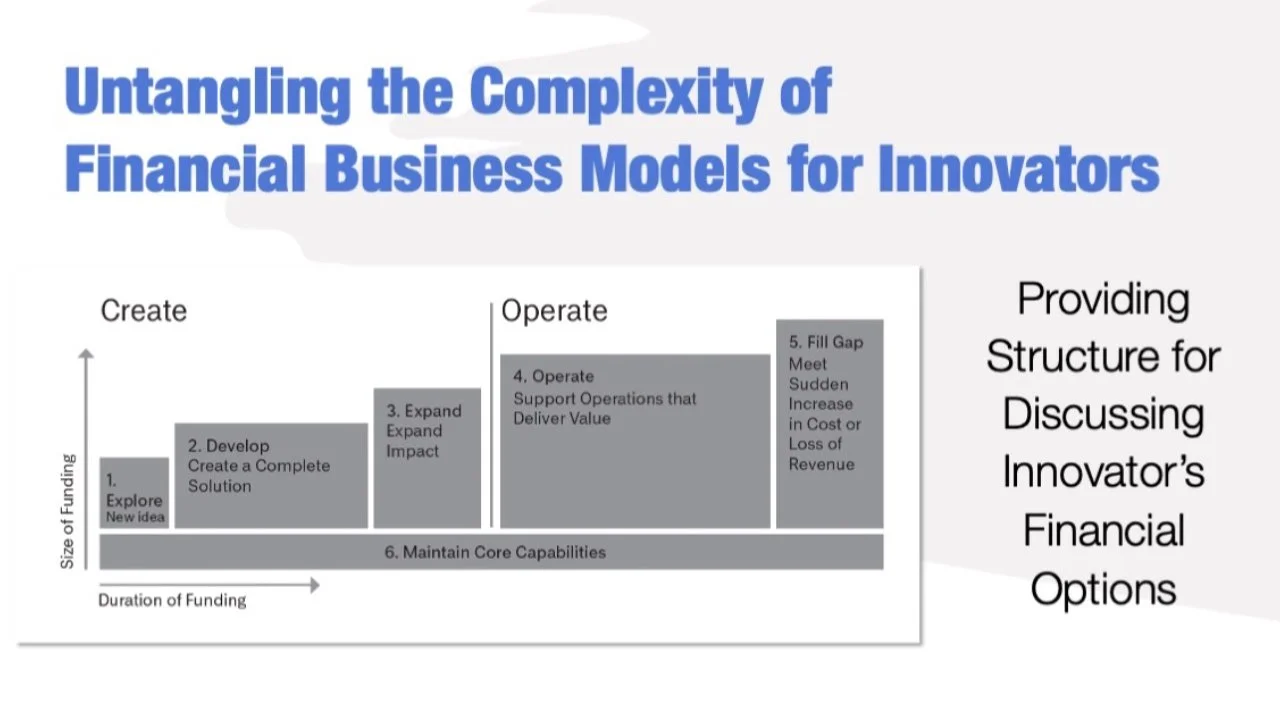
Untangling the Complexity of Financial Business Models for Innovators
Often when you find that it's difficult to have a coherent discussion on a subject, the underlying reason is because there is unrecognized complexity in the subject. As a result one person starts talking about one aspect of the problem, and then another person seems to go off in an entirely different direction. It can be frustrating because these complex issues often require serious thought and strategic work.
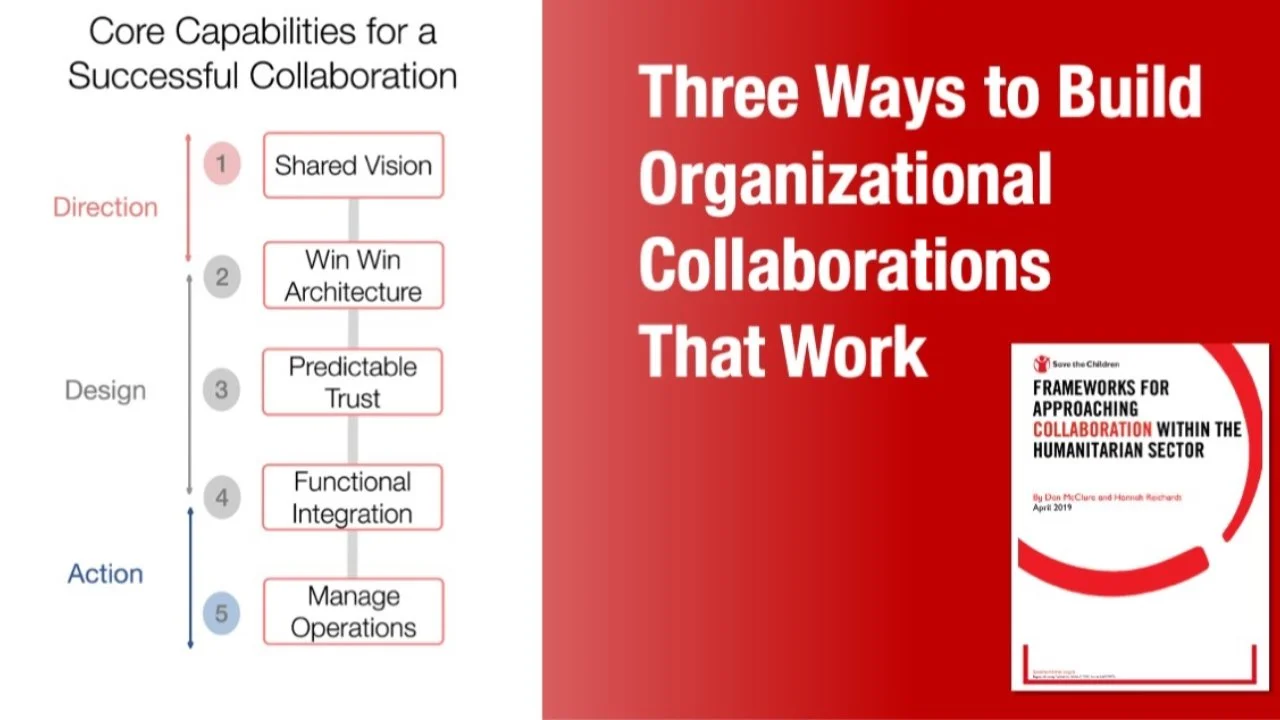
Three Ways to Build Organizational Collaborations that Work
The power of Ecosystem Innovation lies in its ability to 'assemble' people, organizations, resources, and technology into systems that do big complex things. There is a lot of strategic thinking that goes into imagining what kinds of 'Lego' blocks need to be put together to do a hard job, but that isn't then end of the challenge.
Technology, Equality, and White Privilege in Aid - System Challenges
Every year the CDAC Network brings together a range of original thinkers to explore difficult, messy challenges confronting humanitarian action. In 2020 during the early months of the global Covid pandemic, I had the privilege of virtually attending this conference and recording the ideas that were presented.
The topic under discussion was the role technology should play in humanitarian action and the extent to which it improved outcomes or actually reinforced deeply embedded issues of white privilege and amplified inequality among those receiving aid. The thought leaders challenged the easy assumptions about the benefits of both Western led aid missions and the value of technology to solve problems in humanitarian action.

Business Models for Non-Profit / Humanitarian Innovators - DEPP Labs
Innovators often create a valuable new idea, but then run into a wall when it comes to paying the bills. As a result, finding a viable financial business model is a key challenge during both development of a new idea and over the long run as the innovation takes its place out in the world.
These challenges are particularly felt by innovators working outside established commercial markets. This includes, social impact entrepreneurs, aid sector innovators, and others working in environments where the 'user' of an innovation is often in a poor position to pay for the value they receive.
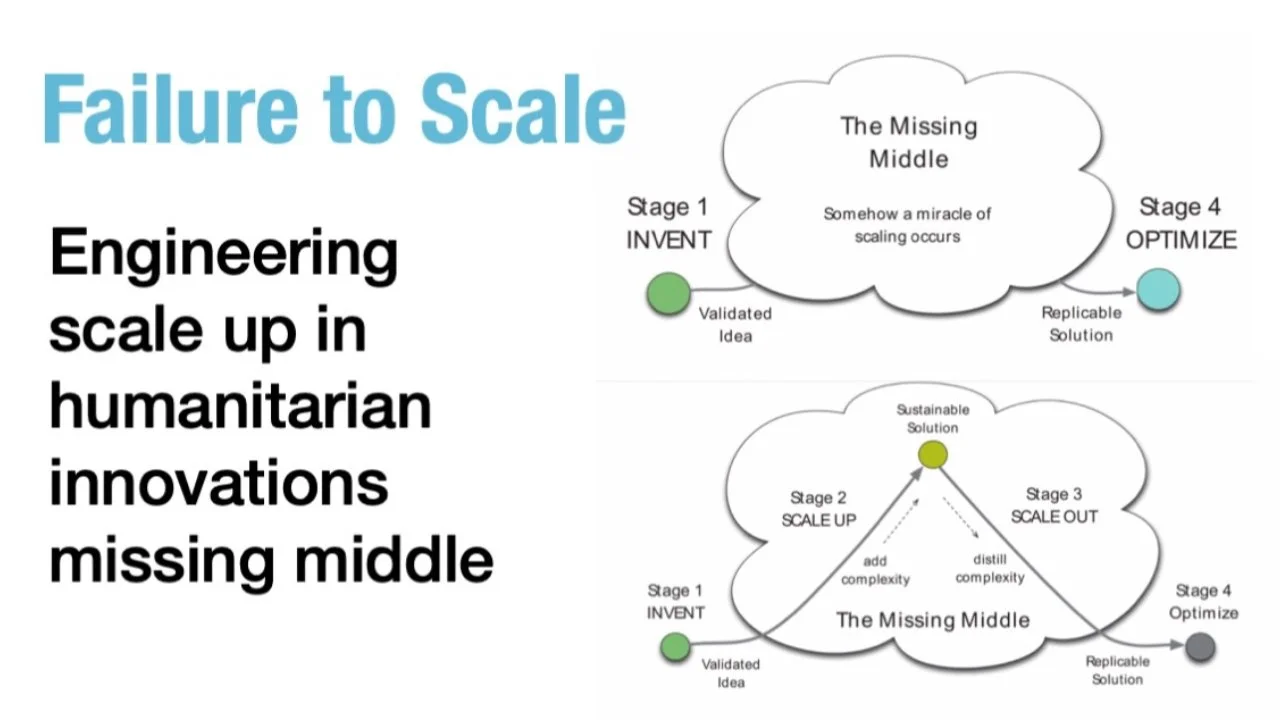
Failure to Scale - Crossing Humanitarian Innovation's Missing Middle
The 2011 publication of Eric Res' book, The Lean Startup, solidified an approach to innovation based on Silicon Valley's entrepreneurial approach to developing mobile apps and other digital products. Innovators were told to develop light weight pilots (minimum viable products), and then test them

The Four Types of Innovation - And Why You Need the New One
A lot of people, even those trained in the field, think that innovation is just one set of practices. That's not the case. How you do innovation depends on the kind of challenge you face. And as a result, over the last 70 years, three very different methodologies have been widely adopted. Today a fourth approach, Ecosystem Innovation, is emerging in response to the need to tackle complex and fast moving challenges in business and the world around us.
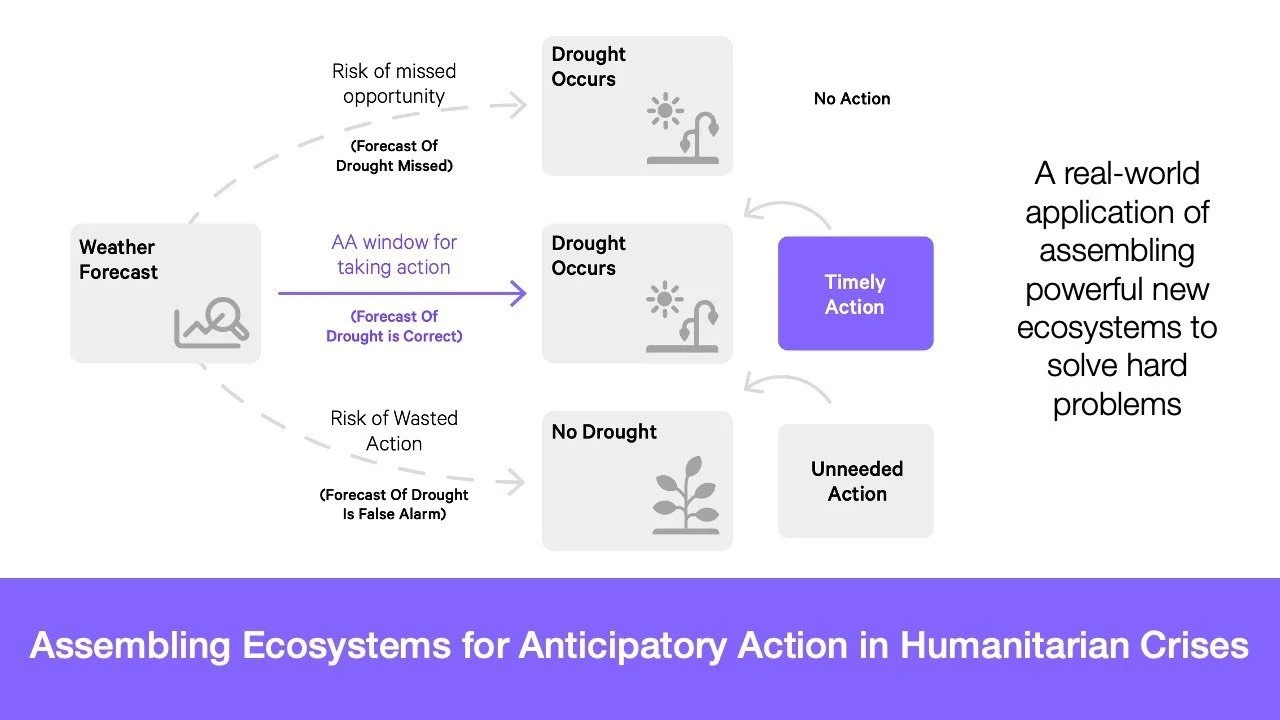
Assembling Ecosystems for Humanitarian Anticipatory Action
It’s a truism that “in a crisis, time is of the essence”. This plays out on a real world stage when floods, draughts, conflict, or other disasters disrupt and sometimes devastate communities. In the past, action on these humanitarian crises was often delayed until events were already well underway.