
Dan McClure's Blog
The Ecosystem Innovation Adventure
Tags
- Agile enterprise
- Books and reading
- Choreographers
- Core concepts
- Do bigger things
- Innovation business models
- Innovation ethics
- Innovation management
- Innovation practice
- Innovation programs
- Innovation scaling
- Sector - Aid and development
- Sector - Communications
- Sector - Technology
- Strategy and design
- Trends and drivers
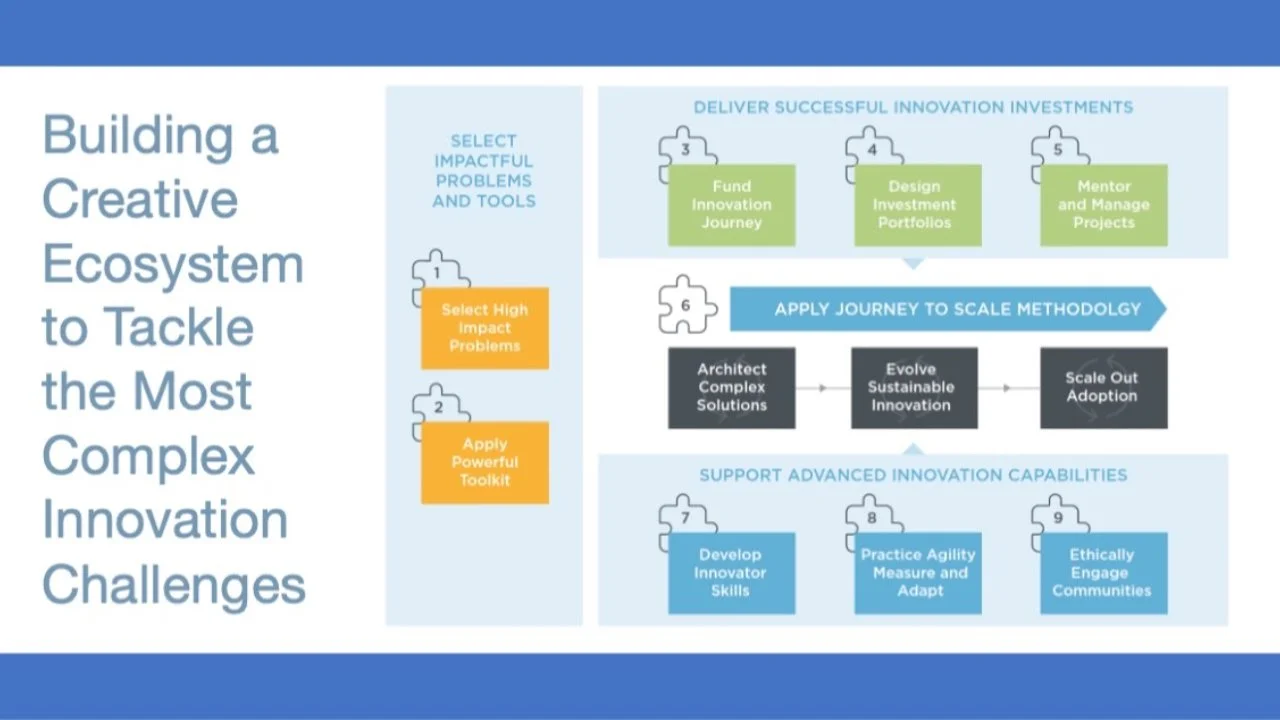
Building a Creative Ecosystem to Tackle the Most Complex Challenges
If you step back and look at the history of innovation practices, it quickly becomes clear that there isn't just one type of innovation problem and that there isn't one 'best' innovation practice. Over the last 50 years, a series of different approaches to innovation have been developed, each tailored to the major creative challenges of the day.
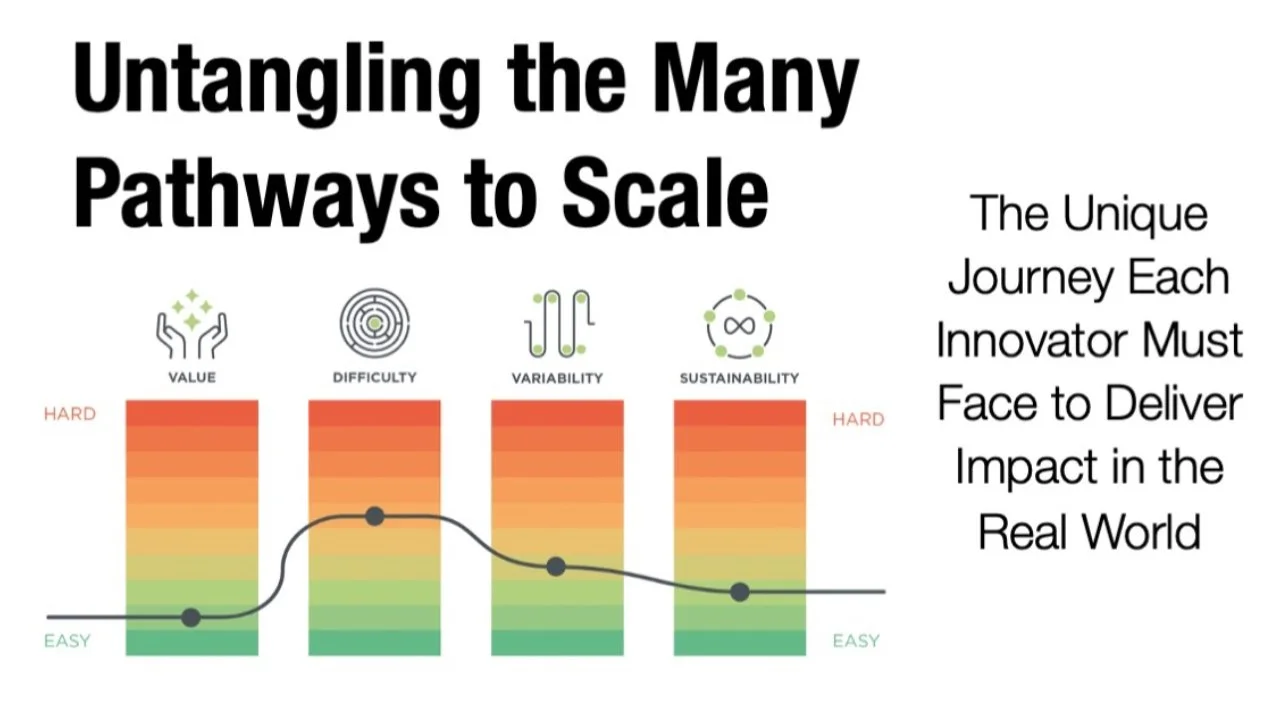
Untangling the Many Pathways to Scale
Once you have a promising and successful pilot, the natural next question is 'How can I get this out in the world and scale its success?" This is a driving concern for almost every innovator, but has a particular urgency for innovators working humanitarian and development aid. Live literally depend on their innovations scaling up and delivering real world impact.
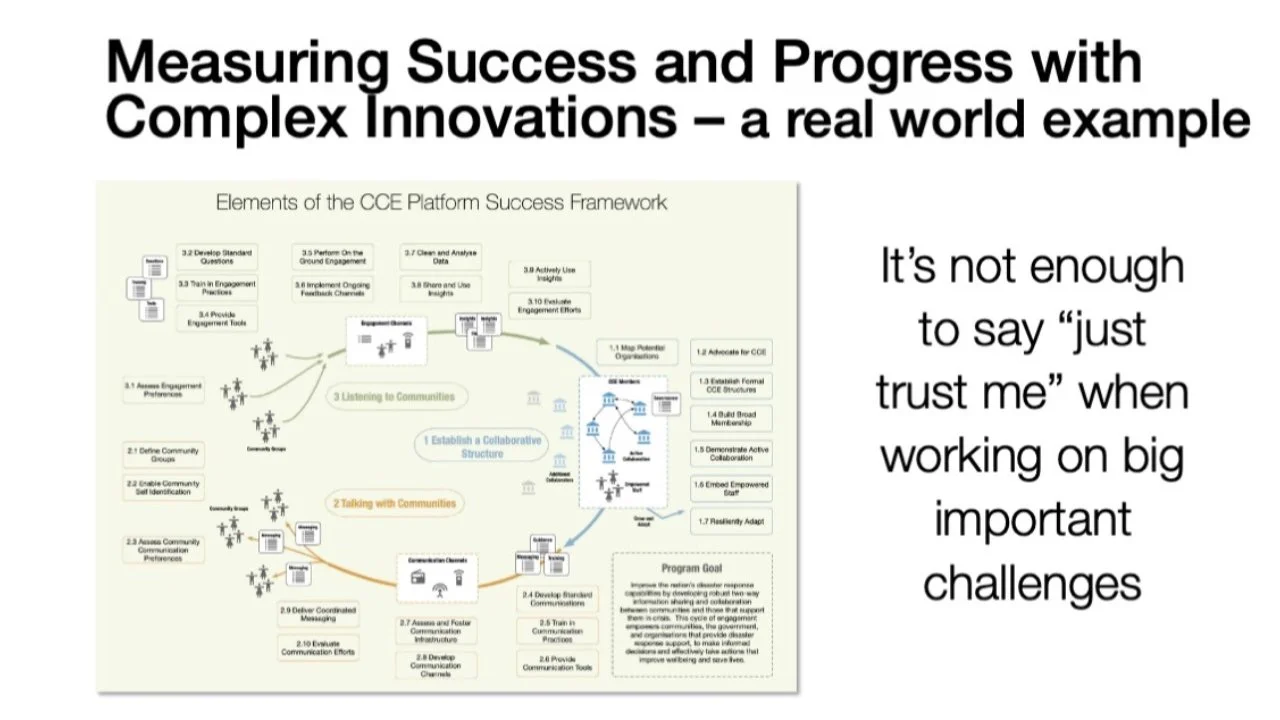
Measuring Success with Complex Innovations – a real world example
One of the things that most infuriates organizational executives about current innovators is the innovator's insistence that you can't plan and measure progress for their work. The rather cheeky message to leadership is that 'what we're doing is so agile and unpredictable, that you just have to trust us to end up in a good spot'.
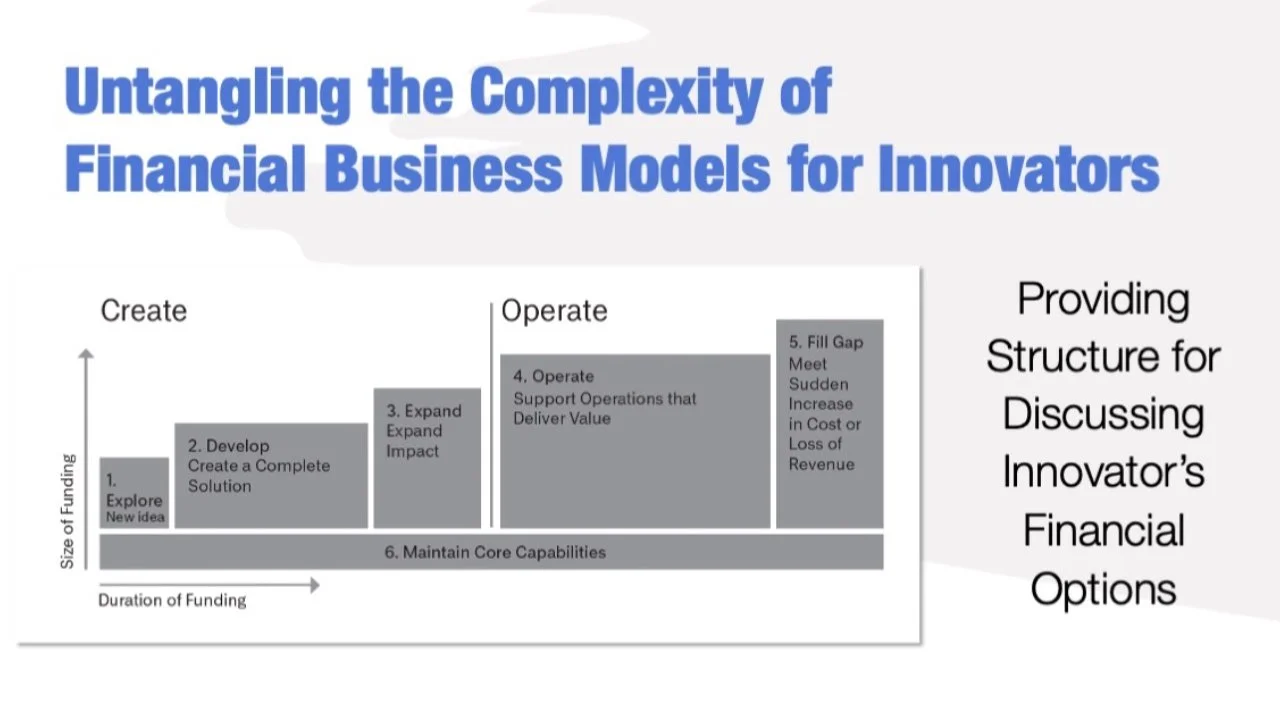
Untangling the Complexity of Financial Business Models for Innovators
Often when you find that it's difficult to have a coherent discussion on a subject, the underlying reason is because there is unrecognized complexity in the subject. As a result one person starts talking about one aspect of the problem, and then another person seems to go off in an entirely different direction. It can be frustrating because these complex issues often require serious thought and strategic work.
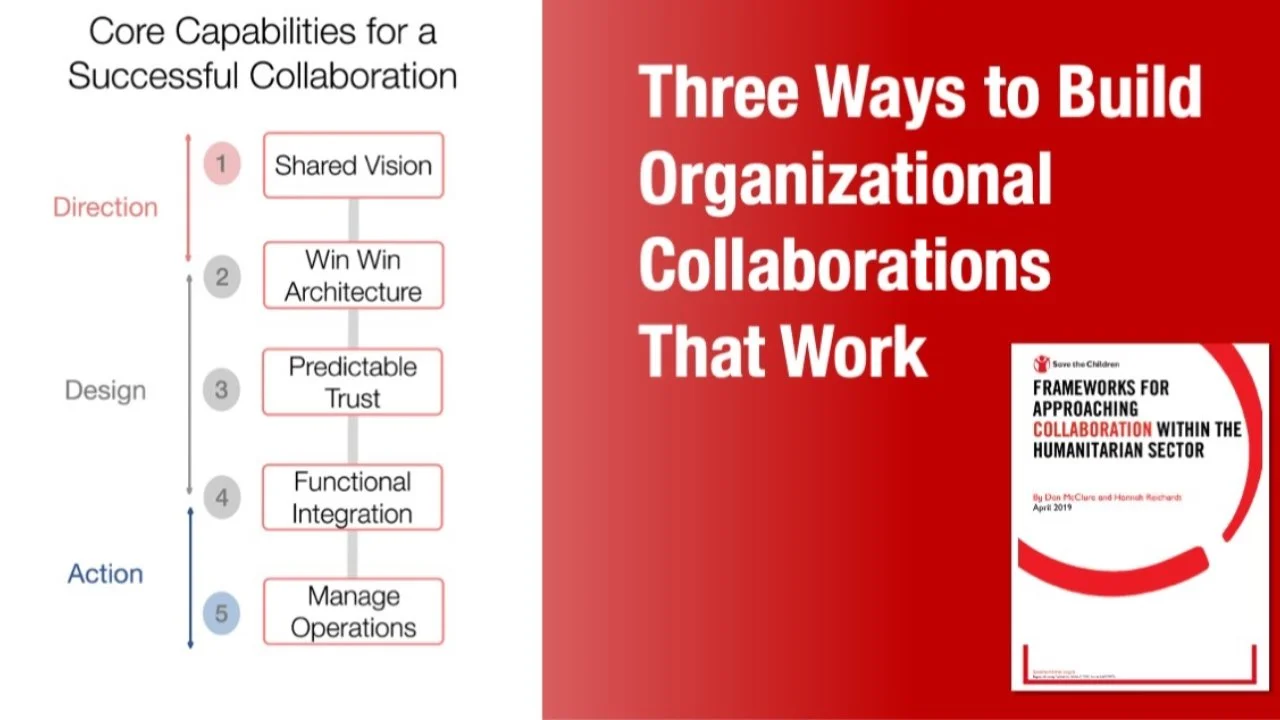
Three Ways to Build Organizational Collaborations that Work
The power of Ecosystem Innovation lies in its ability to 'assemble' people, organizations, resources, and technology into systems that do big complex things. There is a lot of strategic thinking that goes into imagining what kinds of 'Lego' blocks need to be put together to do a hard job, but that isn't then end of the challenge.

Technology, Equality, and White Privilege in Aid - System Challenges
Every year the CDAC Network brings together a range of original thinkers to explore difficult, messy challenges confronting humanitarian action. In 2020 during the early months of the global Covid pandemic, I had the privilege of virtually attending this conference and recording the ideas that were presented.
The topic under discussion was the role technology should play in humanitarian action and the extent to which it improved outcomes or actually reinforced deeply embedded issues of white privilege and amplified inequality among those receiving aid. The thought leaders challenged the easy assumptions about the benefits of both Western led aid missions and the value of technology to solve problems in humanitarian action.

Business Models for Non-Profit / Humanitarian Innovators - DEPP Labs
Innovators often create a valuable new idea, but then run into a wall when it comes to paying the bills. As a result, finding a viable financial business model is a key challenge during both development of a new idea and over the long run as the innovation takes its place out in the world.
These challenges are particularly felt by innovators working outside established commercial markets. This includes, social impact entrepreneurs, aid sector innovators, and others working in environments where the 'user' of an innovation is often in a poor position to pay for the value they receive.
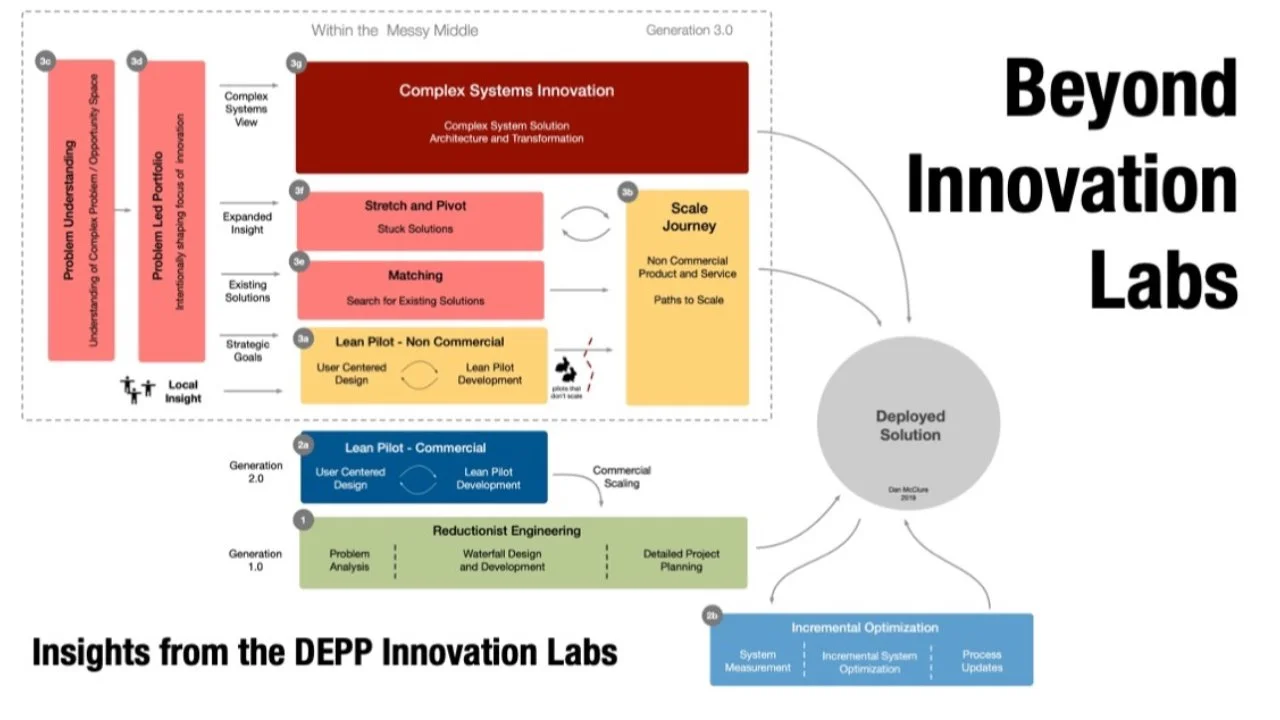
Labs and Beyond - Opportunities to Transform Innovation Support
This report, developed for the START Network, explores opportunities for pushing beyond conventional innovation support models. Leveraging hands-on insights from the DEPP Innovation lab initiative in Kenya, Jordan, Bangladesh and the Philippines, it challenges what may seem to be an obvious assumption … that doing more for humanitarian and development sector innovation requires direct investment in programs that support innovators in their work.

Looking Back: Four Hidden Trends of Innovation Growing Up
The last couple years have seen rapidly growing interest in innovations that embrace complex challenges and tackle disruptive new opportunities. That might make it seem like the drivers behind Ecosystem Innovation have just emerged ... but that isn't the case.
This article from 2015 shows that the drivers and opportunities of system level innovation were already well established and set to grow.
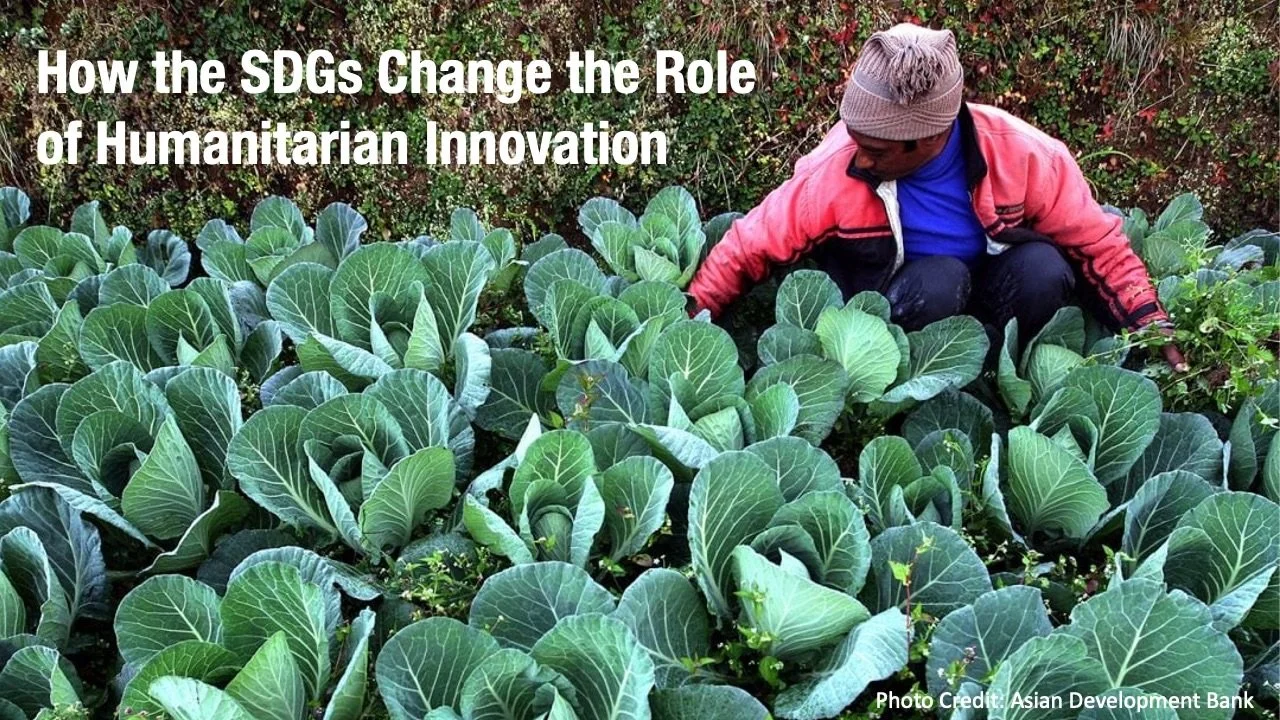
How the SDGs Change the Role of Humanitarian Innovation
In 2015, the United Nation's Sustainable Development Goals were released. They embodied a key strategy of ecosystem innovators, setting ambitious targets that will drive system level change. In the years since their release, the 17 "SDG's" have provided a focus for ambitious change in poverty, justice, health, climate and more.
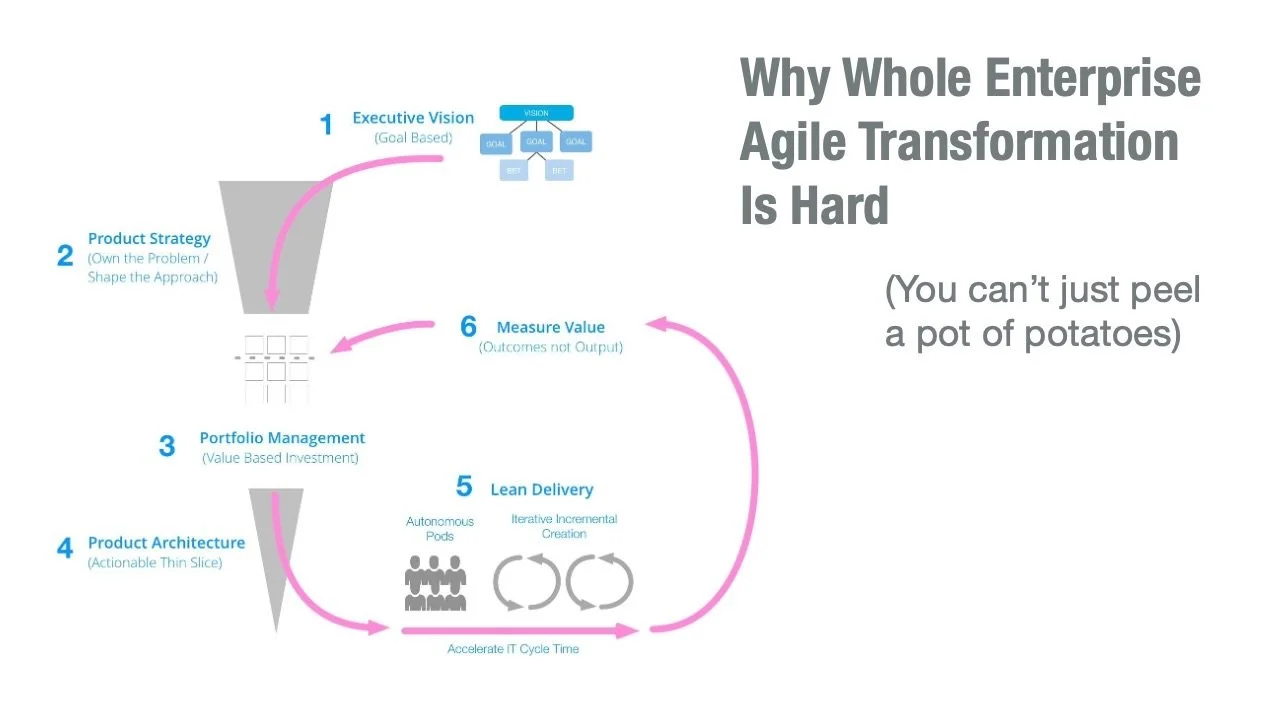
Why Whole Enterprise Agile Transformation is Hard
Agile Transformation has never easy. But today, when agile transformations encompass the entire enterprise, there are a new set of implementation challenges that leaders of creative change must address.
Over the last 20 years there has been a multiple waves of 'Agile Transformations'. These began with the transformation of practices for software development teams, moving from a highly structured waterfall approach to one where teams could learn and adapt as they took on complex challenges. That was Agile 1.0. With the advent of digital businesses and mobile applications, a second wave of transformation focused on independent business+technology teams that pursued distinct opportunities, often at arms length from the main business (Agile 2.0).

I Love Stupid Dreams ... (and you could too)
This is an article I wrote after talking with a friend who confessed that she had a 'stupid dream' for her life. It wasn't that her aspiration didn't make sense or was irrelevant in the world where we live. In fact it was a great dream, one that I could entirely imagine her doing with passion and impact in the world.
It was 'stupid' only because it was unconventional and didn't have a familiar established path to make it real. It was the kind of dream that a casually insensitive teacher, partner, or parent might dismiss out of hand just because it didn't fit in the obvious boxes of work and employment that most lives are squeezed lives into.
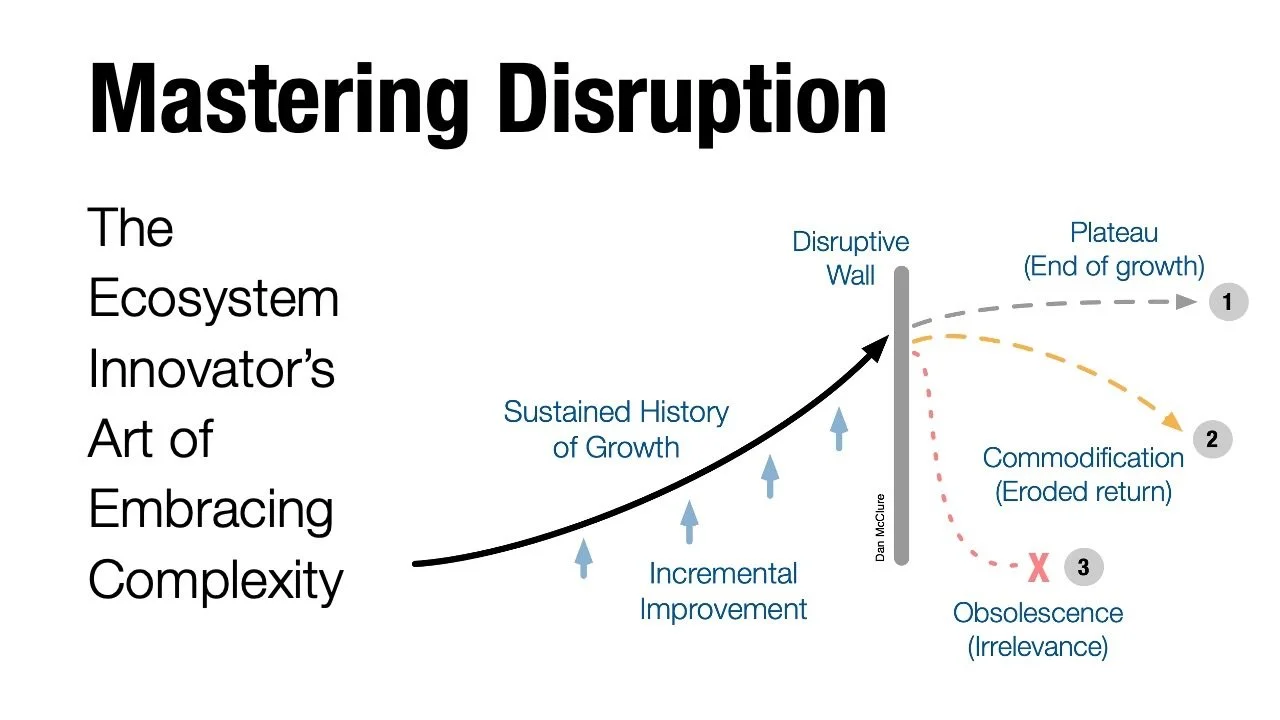
Mastering Disruption: The Ecosystem Innovator's Art of Embracing Complexity
A global health crisis, or climate driven heat wave, or a sudden crucial business threat, all highlight disruptions where systems designed to meet one need face radically different demands. In this environment, it can be tempting for innovators to jump in and act quickly, drawing on well-established practices of product and service innovation. Fast-moving teams look for quick wins, engaging users, failing fast, and learning quickly as they rush to address specific needs.
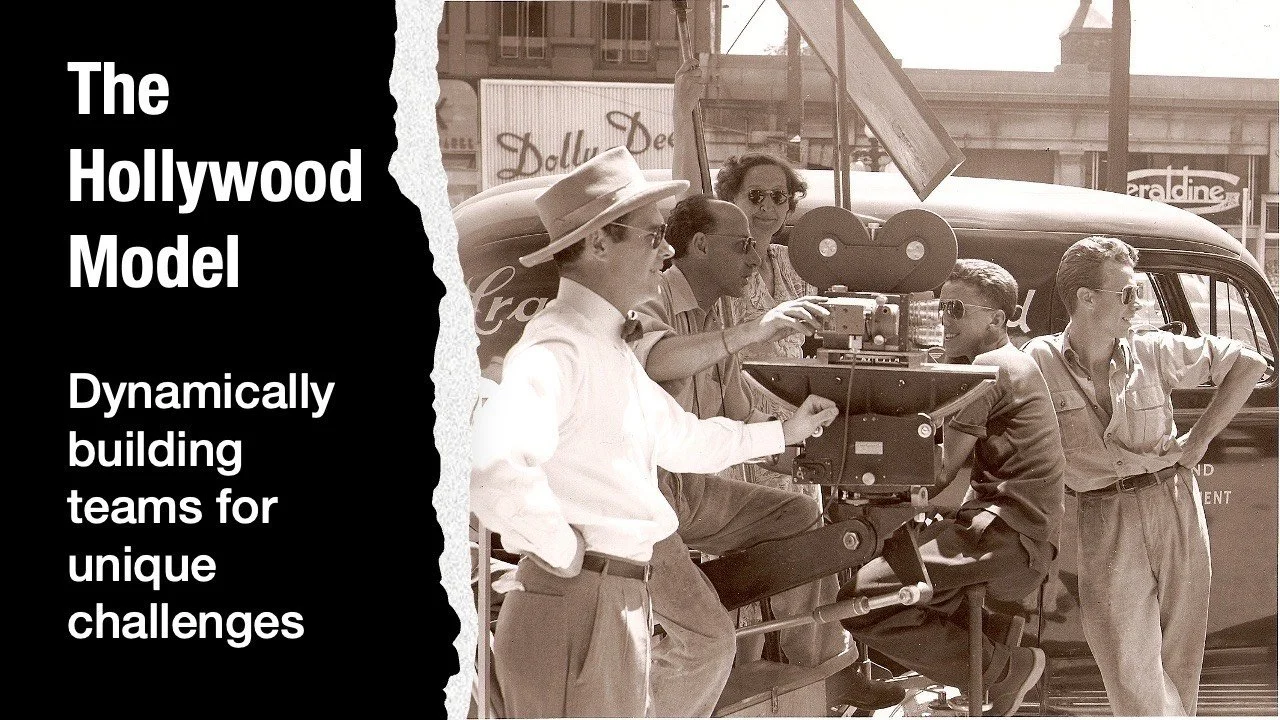
The Hollywood Model: Dynamically building teams for unique challenges
How many organisations can produce the equivalent of a hit movie? While it’s easy to roll your eyes at some of Hollywood’s efforts, the reality is that this industry is capable of repeatedly undertaking new and original initiatives: leveraging a myriad of different skills in the service of a complex and rapidly shifting market. Their survival and success depends on the ability to repeatedly do creativity at scale.
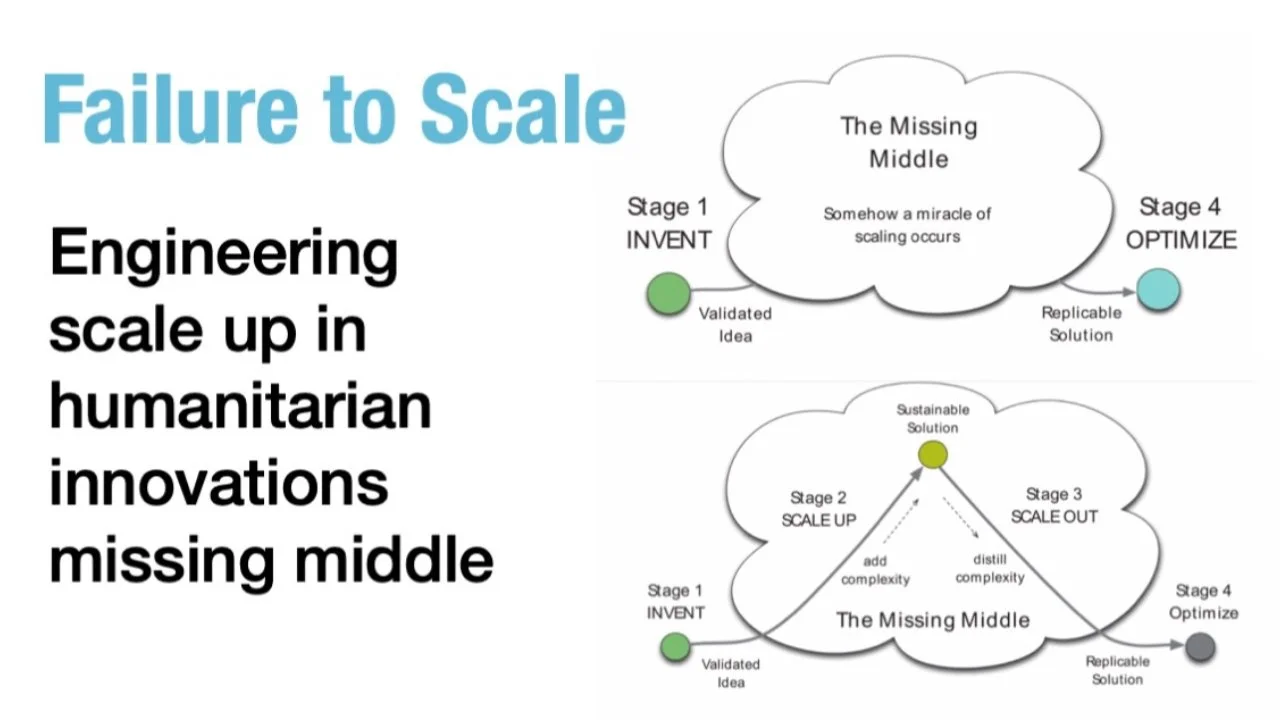
Failure to Scale - Crossing Humanitarian Innovation's Missing Middle
The 2011 publication of Eric Res' book, The Lean Startup, solidified an approach to innovation based on Silicon Valley's entrepreneurial approach to developing mobile apps and other digital products. Innovators were told to develop light weight pilots (minimum viable products), and then test them
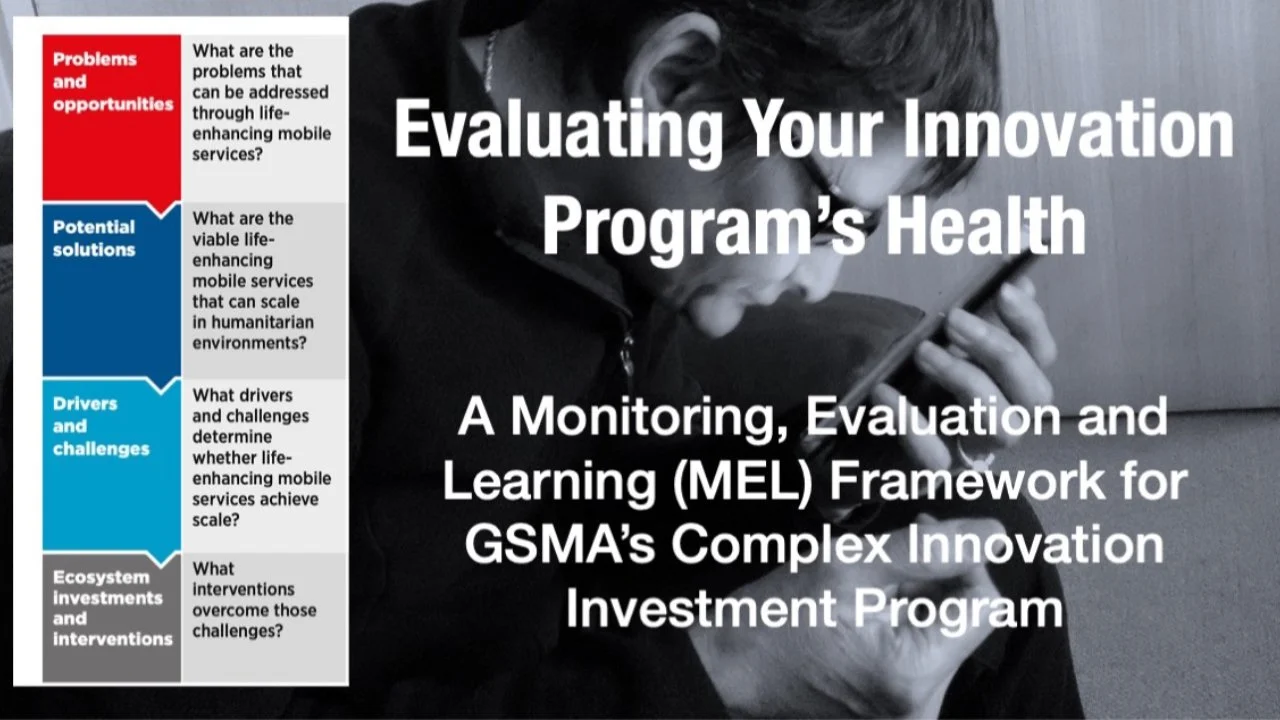
Evaluating the Health of a Sophisticated Innovation Program
How do you assess the health of an innovation program and its ability to generate impactful and successful innovations? If you're a commercial investor, over time the financial return of the selected investments may be a satisfactory proxy for the investments you've made.
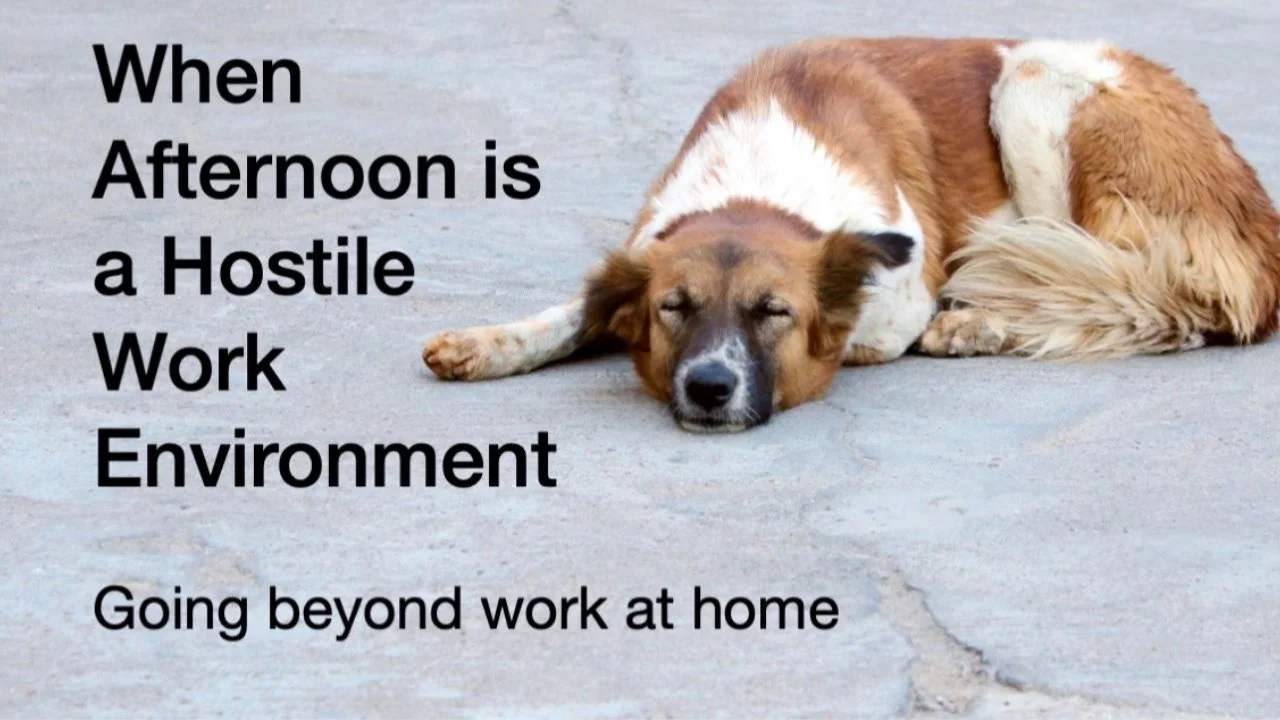
When Afternoon is a Hostile Work Environment
(This is an updated version of an article written several years before the COVID pandemic. Given the level of disruption that came with widespread adoption of remote work, you might think that the big battles of work design have largely been fought. I don't see it that way. As this article points out, there is much more that could / should be done to reimagine work as organizations seek to capture the best creative work from their most unique team members.)
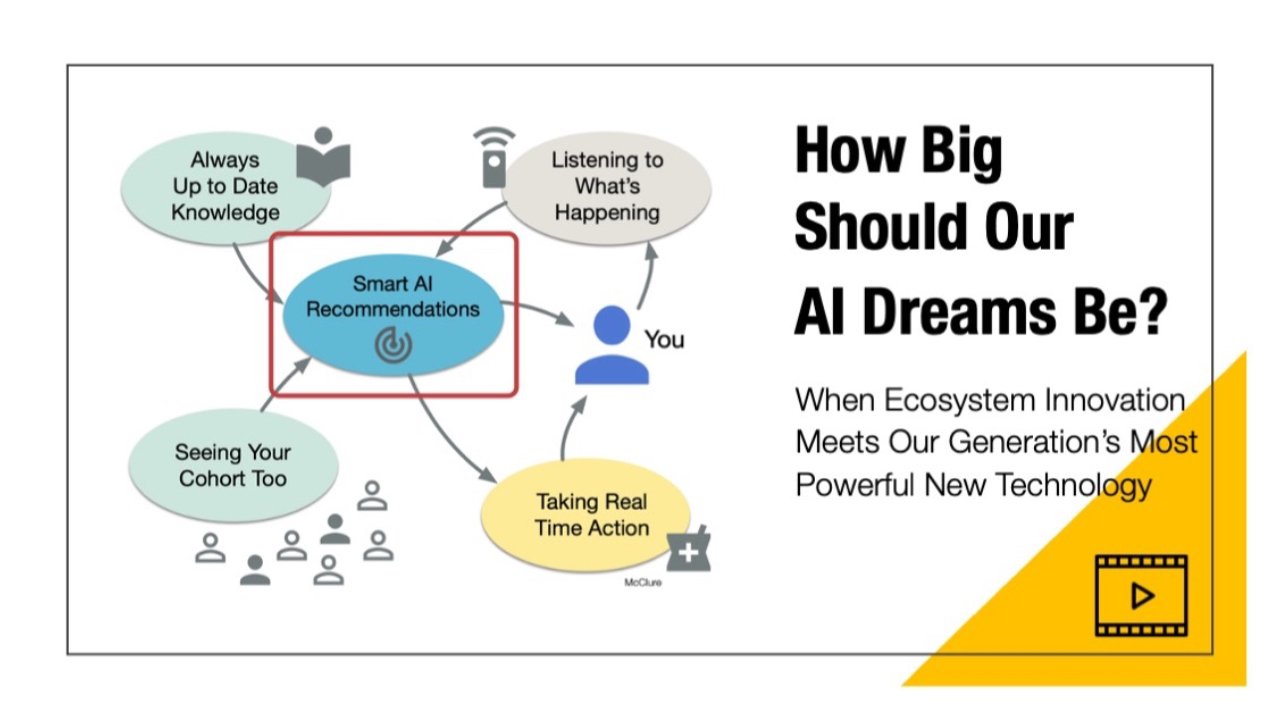
How Big Should Our AI Dreams Be? And What Will They Demand from Us? (video)
Artificial Intelligence is like to be the most powerful new technology to emerge in our age of exceptionally powerful new tech. It has the ability to supercharge an organization, particularly if the organization is ready to adopt strategies built on ecosystem innovation.
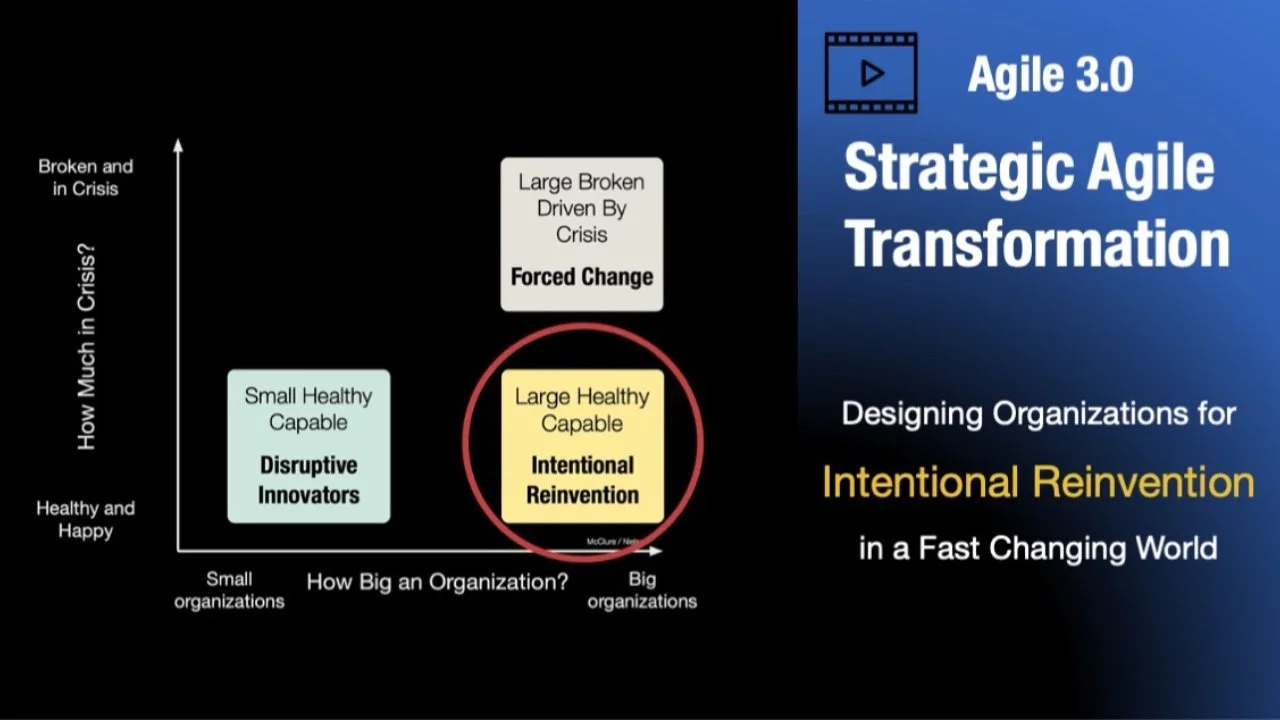
Strategic Agile Transformation - Creating Organizations Capable of Intentional Reinvention
When 'Agile' emerged over 20 years ago, it was a revolutionary practice for software teams building complex real world systems. Since then, agile principals have been extended to broader business and market challenges, like developing pioneering new digital products. Today, the challenges faced by organizations have become even more demanding. Deep disruptions are likely to happen, not just once, but over and over again.

The Four Types of Innovation - And Why You Need the New One
A lot of people, even those trained in the field, think that innovation is just one set of practices. That's not the case. How you do innovation depends on the kind of challenge you face. And as a result, over the last 70 years, three very different methodologies have been widely adopted. Today a fourth approach, Ecosystem Innovation, is emerging in response to the need to tackle complex and fast moving challenges in business and the world around us.