
Dan McClure's Blog
The Ecosystem Innovation Adventure
Tags
- Agile enterprise
- Books and reading
- Choreographers
- Core concepts
- Do bigger things
- Innovation business models
- Innovation ethics
- Innovation management
- Innovation practice
- Innovation programs
- Innovation scaling
- Sector - Aid and development
- Sector - Communications
- Sector - Technology
- Strategy and design
- Trends and drivers
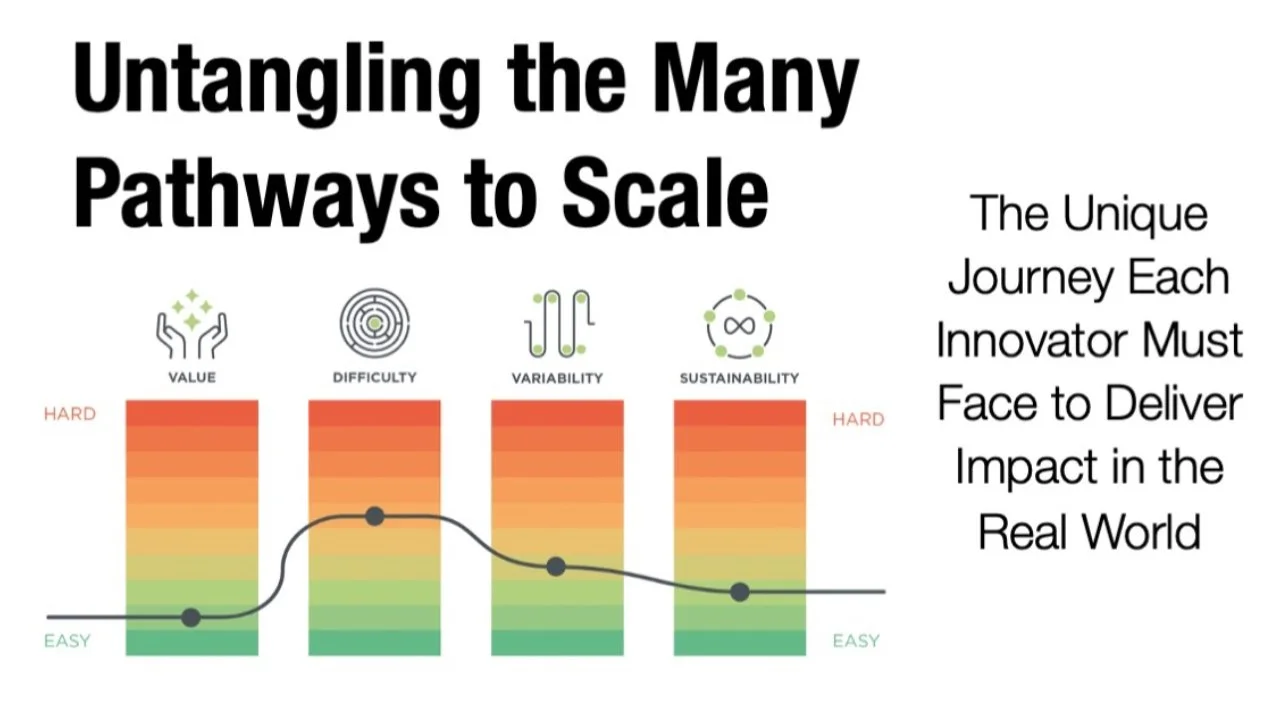
Untangling the Many Pathways to Scale
Once you have a promising and successful pilot, the natural next question is 'How can I get this out in the world and scale its success?" This is a driving concern for almost every innovator, but has a particular urgency for innovators working humanitarian and development aid. Live literally depend on their innovations scaling up and delivering real world impact.
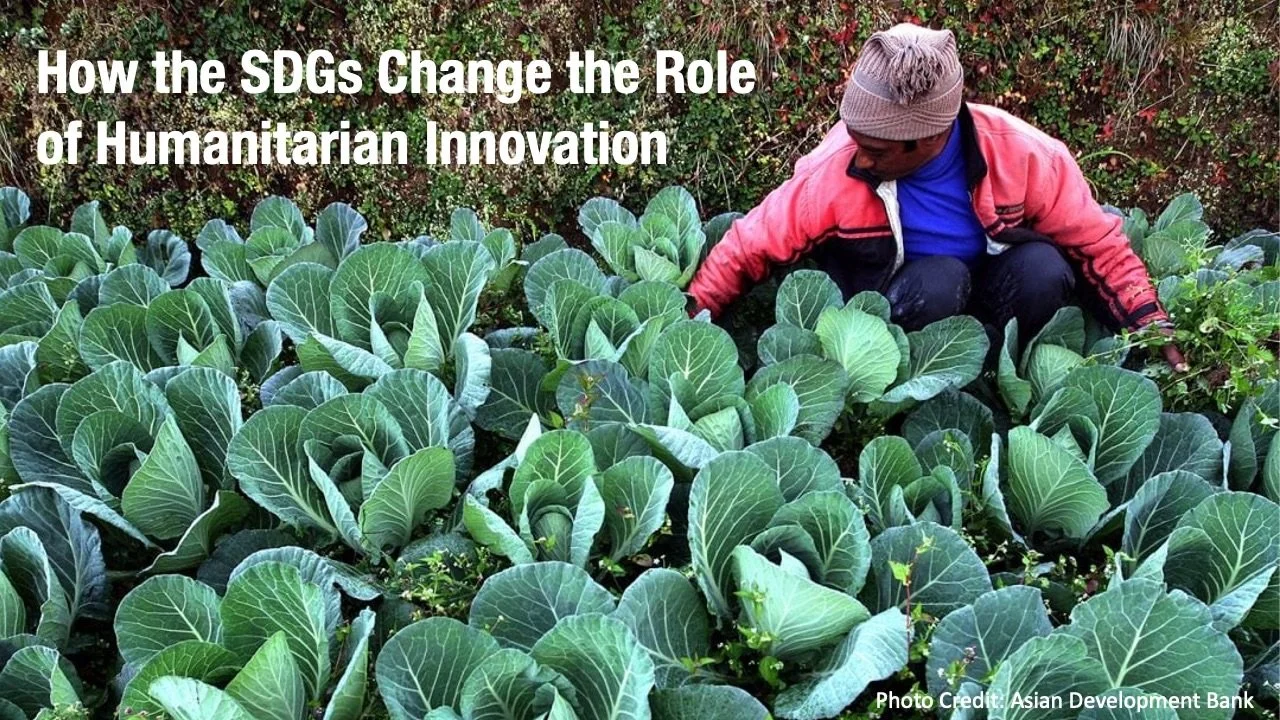
How the SDGs Change the Role of Humanitarian Innovation
In 2015, the United Nation's Sustainable Development Goals were released. They embodied a key strategy of ecosystem innovators, setting ambitious targets that will drive system level change. In the years since their release, the 17 "SDG's" have provided a focus for ambitious change in poverty, justice, health, climate and more.
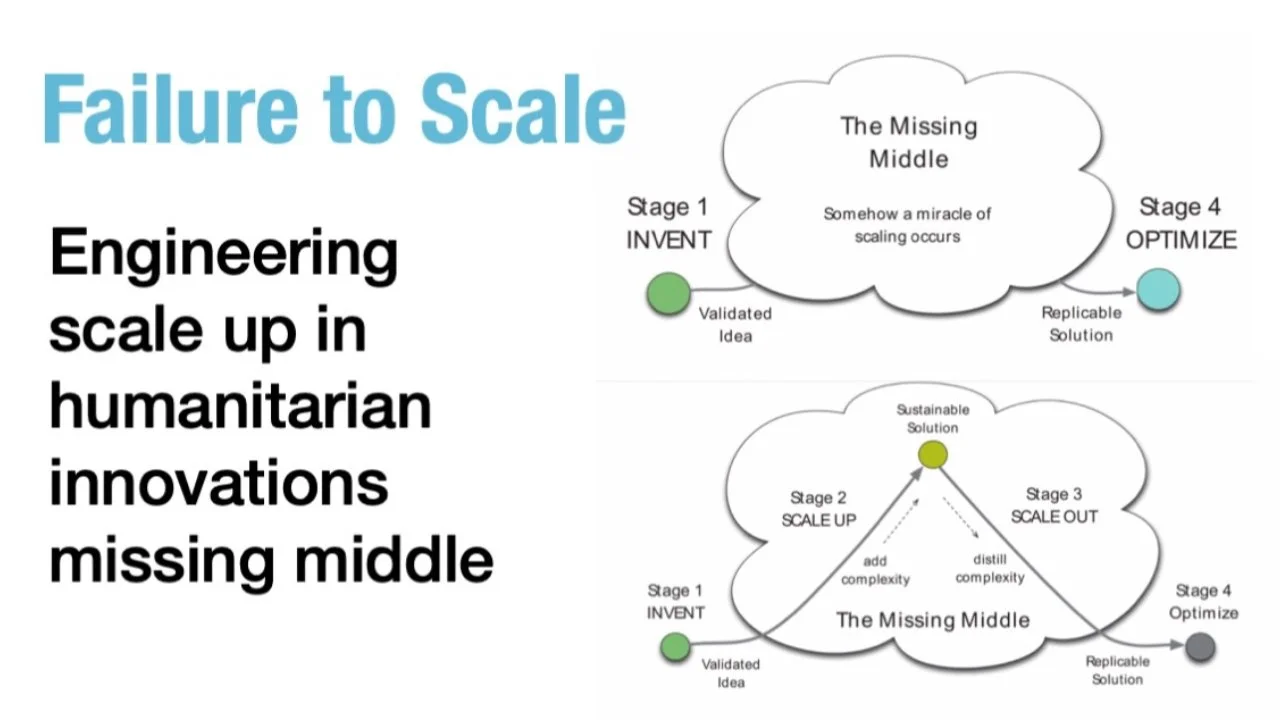
Failure to Scale - Crossing Humanitarian Innovation's Missing Middle
The 2011 publication of Eric Res' book, The Lean Startup, solidified an approach to innovation based on Silicon Valley's entrepreneurial approach to developing mobile apps and other digital products. Innovators were told to develop light weight pilots (minimum viable products), and then test them

The Four Types of Innovation - And Why You Need the New One
A lot of people, even those trained in the field, think that innovation is just one set of practices. That's not the case. How you do innovation depends on the kind of challenge you face. And as a result, over the last 70 years, three very different methodologies have been widely adopted. Today a fourth approach, Ecosystem Innovation, is emerging in response to the need to tackle complex and fast moving challenges in business and the world around us.
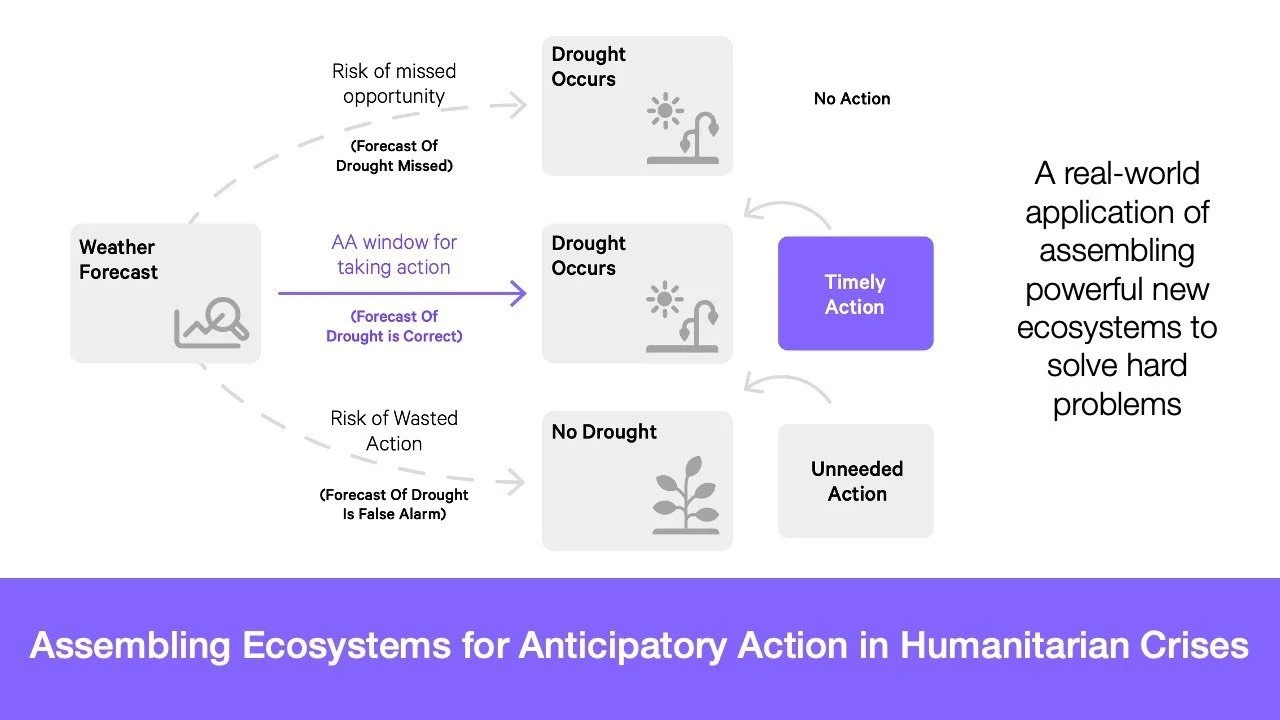
Assembling Ecosystems for Humanitarian Anticipatory Action
It’s a truism that “in a crisis, time is of the essence”. This plays out on a real world stage when floods, draughts, conflict, or other disasters disrupt and sometimes devastate communities. In the past, action on these humanitarian crises was often delayed until events were already well underway.